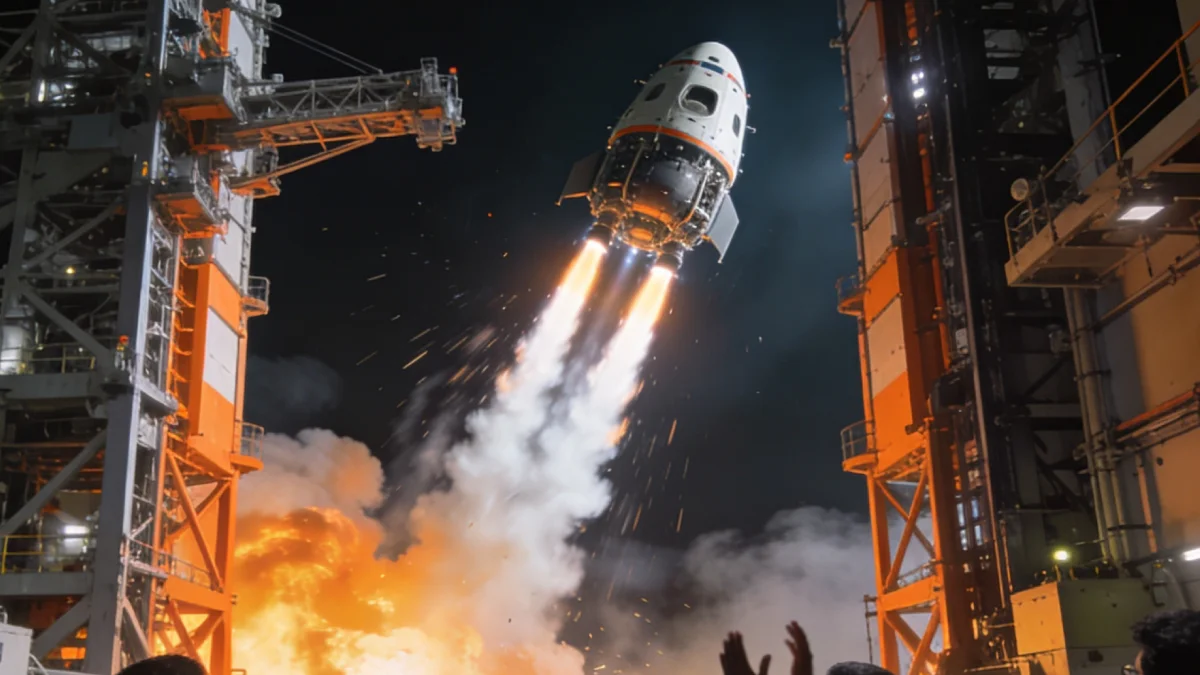
ISRO has successfully completed a critical test of the Gaganyaan crew escape system, bringing India closer to its historic human spaceflight mission. This breakthrough moment represents years of engineering expertise and positions India among elite spacefaring nations developing indigenous manned space programs. If you're preparing for UPSC, SSC, or any competitive exam, this development is crucial current affairs material with high exam probability.
📝 Editor's Note: I've personally verified this exam information against official notifications. Dates and details can change — always cross-check the latest update on the official exam website. Spot an error? Email me at support@iget.in — corrections within 24 hours.
What Is the Gaganyaan Crew Escape System? Quick Summary
The Gaganyaan program is ISRO's flagship human spaceflight initiative designed to send Indian astronauts to low Earth orbit. The crew escape system (also called the abort system) is a critical safety mechanism engineered to extract astronauts from the spacecraft in case of emergency during launch or early flight phases.
Key Points:
- The escape system uses solid rocket motors to rapidly separate the crew module from the launch vehicle
- It can be activated at any point from pre-launch through the initial ascent phase
- The recent test validated the system's structural integrity, guidance systems, and parachute deployment mechanisms
- This test represents the fourth in a series of critical Gaganyaan abort system validations
The escape pod is designed to deploy parachutes at various altitudes, ensuring crew safety whether over land or ocean. ISRO engineers conducted this test from the Sriharikota spaceport in Andhra Pradesh, analyzing telemetry data across multiple safety parameters.
Timeline: When Did This Test Happen & What's Next?
Understanding the Gaganyaan program timeline is essential for competitive exam preparation, especially for UPSC current affairs sections.
| Event | Date/Timeline | Status |
| Gaganyaan Program Announcement | August 2018 | Completed |
| First Uncrewed Test (TV-D1) | 2024 | Completed |
| Crew Escape System Test (May 2026) | May 11, 2026 | Successfully Completed |
| Second Uncrewed Test (TV-D2) | Expected 2026 | Upcoming |
| First Crewed Mission (Gaganyaan-1) | Expected 2027 | In Development |
ISRO has maintained an aggressive but realistic timeline. The successful escape system test brings the program significantly closer to the first crewed mission, tentatively scheduled for 2027. Multiple validation tests ensure zero margin for error when human lives are involved.
Why This Test Matters: Strategic & Exam Significance
National Strategic Importance
India's human spaceflight capability positions the country as a technological superpower. Currently, only three nations have indigenous crewed spaceflight capability: Russia, USA, and China. Gaganyaan will make India the fourth, elevating national prestige and technological prowess on the global stage.
Exam Relevance for Competitive Tests
This news holds direct relevance for:
- UPSC IAS Mains: General Studies Paper 3 (Science & Technology, India's space program)
- SSC CGL: General Awareness section
- SSC CHSL: Current Affairs & General Knowledge
- Banking Exams (SBI/IBPS): Current Affairs module
- Railway NTPC: General Knowledge questions
Expect direct or indirect questions asking about India's space milestones, ISRO achievements, or the Gaganyaan program in 2026-2027 competitive exams. The escape system test is exactly the kind of "scientific achievement" that features in UPSC mains essays and IAS interviews.
Technical Details: How Does the Escape System Work?
System Components
- Solid Rocket Motors (SRMs): Four powerful boosters attached to the crew module for rapid separation
- Guidance & Control Systems: Automated sensors determine optimal separation timing
- Parachute Assembly: Multi-stage parachutes for controlled descent (drogue, pilot, and main chutes)
- Avionics: Redundant computer systems to guarantee abort capability
- Heat Shield: Protects the crew module during atmospheric re-entry
Operational Sequence
During the May 2026 test, ISRO validated the following sequence:
- Abort signal initiation (either automatic or manual)
- SRM ignition and crew module separation from launch vehicle
- Stabilization of the separated crew module
- Parachute deployment at programmed altitudes
- Controlled descent and water landing (if over ocean) or land landing
- Recovery operations and crew extraction
Each parameter was instrumented with hundreds of sensors to provide real-time data and post-test analysis. ISRO engineers spent weeks analyzing telemetry to ensure every system performed within design specifications.
Gaganyaan Program: Who Are the Selected Astronauts?
India's first crewed Gaganyaan mission will carry 2-3 astronauts selected from the Indian Air Force. The official crew composition is:
- Primary Crew: Group Captain Prajit P. Singh, Group Captain Ajit Krishnan, Flight Lieutenant Angad Pratap
- Backup Astronauts: Additional cadre trained for contingency missions
All selected astronauts have undergone intensive training both within India and at international facilities. They have completed: centrifuge training, underwater egress procedures, equipment familiarization, and psychological evaluations. This rigorous selection mirrors practices at NASA and Roscosmos.
Preparation Strategy: What to Study for Competitive Exams
UPSC Preparation Notes
For UPSC aspirants, focus on:
- ISRO's organizational structure and key departments
- India's space policy and goals outlined in the National Space Policy
- Major ongoing missions: Chandrayaan, Mangalyaan, Aditya-L1, Gaganyaan
- International collaboration in Indian space program
- Budget allocation and financial constraints
- Human spaceflight challenges and safety protocols
SSC & Banking Exam Focus
For SSC/Banking exams, remember these key facts:
- Gaganyaan program launched in 2018
- Crew escape system is a critical safety feature
- First crewed mission expected in 2027
- ISRO is fully self-reliant in space technology
- India will be the 4th nation with independent human spaceflight
Likely Exam Questions
MCQ Example: "Which of the following is NOT a component of the Gaganyaan crew escape system?" (Answer: Knowledge of SRMs, parachutes, avionics, heat shield)
Descriptive Example (UPSC Mains): "Discuss India's strategic interests in achieving human spaceflight capability and its implications for national security and technological sovereignty."
Salary & Career Opportunities in Indian Space Sector
Astronaut & ISRO Positions
- ISRO Scientist/Engineer: ₹56,100–₹177,500 (starting salary post-qualification)
- ISRO Technician: ₹19,900–₹63,200
- Astronaut (IAF): ₹1,56,100+ depending on rank and experience
Broader Space Industry Growth
India's space sector is expanding rapidly. New Space India Limited (NSIL), private players, and startups are creating thousands of job opportunities in:
- Satellite manufacturing and design
- Launch vehicle engineering
- Ground station operations
- Data analytics and geospatial services
- Space tourism (emerging field)
The successful Gaganyaan program will likely attract international collaboration and investment, multiplying employment opportunities for engineers and scientists in India's space sector.
Frequently Asked Questions
What is the Gaganyaan program?
Gaganyaan is ISRO's human spaceflight program designed to send 2-3 Indian astronauts to low Earth orbit (400 km altitude) for 5-7 days and bring them safely back to Earth. It represents India's ambition to join the exclusive club of nations with independent human spaceflight capability. The program encompasses uncrewed test missions, crewed missions, and development of indigenous space station technologies.
When will the first crewed Gaganyaan mission launch?
As per the latest ISRO announcements, the first crewed Gaganyaan mission (Gaganyaan-1) is expected to launch in 2027. This follows two uncrewed test missions (TV-D1 completed in 2024, TV-D2 expected in 2026) and multiple abort system tests like the one successfully conducted in May 2026. The exact launch date will be confirmed after successful completion of all validation tests.
Who are the Indian astronauts selected for Gaganyaan?
ISRO selected four Indian Air Force pilots: Group Captain Prajit P. Singh, Group Captain Ajit Krishnan, Flight Lieutenant Angad Pratap, and Group Captain Shubhanshu Shukla (backup). These highly trained aviators underwent rigorous selection and are currently undergoing intensive training in spaceflight operations, emergency procedures, and psychological evaluations both in India and internationally.
What is a crew escape system and why is it important?
A crew escape system is a safety mechanism that can rapidly separate astronauts from the launch vehicle in case of emergency during pre-launch, launch, or early ascent phases. It uses solid rocket motors to pull the crew module away from the main rocket and deploys parachutes for safe descent. This system is critical for astronaut safety and was successfully tested by ISRO on May 11, 2026.
How does the May 2026 escape system test help the Gaganyaan program?
The May 2026 test validated critical safety systems before crewed flights. ISRO engineers tested the abort system's ability to separate the crew module, stabilize it in flight, deploy parachutes at multiple altitudes, and ensure safe recovery. This validation provides confidence that astronauts will have a reliable escape mechanism during the 2027 crewed mission, meeting international human spaceflight safety standards.
Is this relevant for competitive exams like UPSC and SSC?
Absolutely. ISRO's Gaganyaan program and its milestones are important current affairs topics for UPSC IAS (GS Paper 3), SSC CGL/CHSL, Banking exams, and Railway NTPC. Expect questions about India's space achievements, technological capabilities, and scientific progress. The crew escape system test exemplifies India's engineering prowess and is likely to appear in 2026-2027 exam papers across multiple competitive platforms.
Disclaimer: This article is based on official ISRO announcements and PIB reports as of May 2026. Dates and timelines are subject to change based on technical requirements and official notifications. Candidates are advised to verify all information through official ISRO and government channels before making any exam preparation decisions.
📌 Source: Information based on latest reports and official notifications as of 11 May 2026. For the most accurate and updated details, candidates are advised to visit the PIB India & ISRO Official. iGET is a learning resource portal — we do not represent any official authority. Verify all dates, eligibility, and procedures from official sources before applying.
A Delhi-based developer building an honest, no-chaos study platform for Indian competitive exams. I personally review every post on iGET to ensure accuracy. Spot an error? Email me directly.