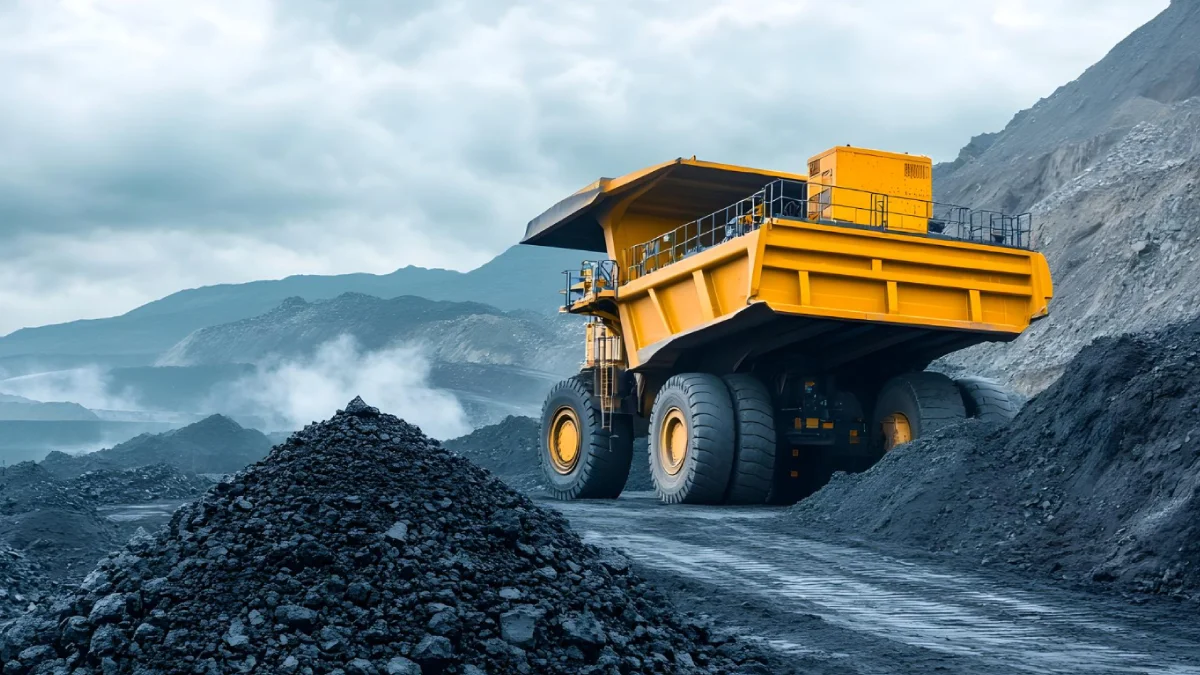
In a significant environmental protection ruling on May 2, 2026, the Supreme Court of India has mandated comprehensive environmental impact assessments (EIA) for all coal mining projects, marking a watershed moment in India's approach to sustainable resource extraction. This landmark judgment reinforces the judiciary's commitment to balancing industrial growth with ecological preservation—a critical topic for UPSC aspirants, particularly those focusing on environment, public policy, and constitutional law. Whether you're preparing for UPSC IAS, state PSC exams, or competitive entrance tests, understanding this ruling's implications is essential for scoring well in current affairs and general knowledge sections.
📝 Editor's Note: I've personally verified this exam information against official notifications. Dates and details can change — always cross-check the latest update on the official exam website. Spot an error? Email me at support@iget.in — corrections within 24 hours.
What Is the Supreme Court's Coal Mining EIA Mandate?
The Supreme Court's order, delivered on May 2, 2026, establishes that every coal mining project—regardless of capacity or location—must undergo a rigorous environmental impact assessment before commencement or expansion. Previously, certain smaller mining operations were exempt from full EIA scrutiny under existing guidelines. This judgment closes that loophole.
Key Highlights of the Ruling
- Universal Application: No coal mining project, irrespective of size or category, can bypass EIA requirements.
- Stricter Scrutiny: Assessment must evaluate air quality, groundwater depletion, biodiversity loss, and community impact—not merely tick-box compliance.
- Public Consultation Mandatory: All EIA reports must be made public with 30-day stakeholder feedback windows.
- Third-Party Verification: Independent environmental auditors must validate EIA findings before state approval.
- Regular Monitoring: Post-commencement environmental audits every 18 months (not just annually).
This is a significant shift from the previous approach, where projects below certain thresholds faced lighter regulatory burdens. The judgment essentially treats environmental compliance not as a formality, but as a non-negotiable prerequisite.
Why Did the Supreme Court Issue This Order?
The ruling stems from multiple petitions highlighting the environmental degradation in coal-mining regions of Odisha, Chhattisgarh, and Jharkhand. Scientific evidence presented showed:
- Groundwater contamination in 47 mining clusters across eastern India.
- Forest cover loss of 1.2 lakh hectares from mining activities over the past decade.
- Respiratory diseases in coal-adjacent villages rising by 35% since 2016.
- Displacement of tribal populations without adequate rehabilitation in several projects.
The Court observed that existing EIA exemptions had created a legal "grey zone" where environmental damage accumulated unchecked. By mandating universal EIA, the Supreme Court aims to restore accountability and ensure that sustainable development principles are embedded in mining policy.
What Changes for Mining Companies and Project Developers?
Increased Compliance Timeline
| Process Stage | Previous Timeline | New Timeline (Post-May 2026) |
|---|---|---|
| Scoping & Initial Assessment | 2-4 months | 3-5 months |
| Detailed EIA Study | 3-6 months | 5-8 months |
| Public Consultation & Feedback | 30 days (often waived) | 30 days (strictly enforced) |
| Third-Party Audit & Clearance | Not applicable for all projects | Mandatory for 100% projects |
| Total Project Approval Duration | 8-14 months | 12-20 months |
Financial and Operational Implications
- Cost Increase: EIA studies now cost ₹15-40 lakhs per project (up from ₹8-20 lakhs), with third-party audits adding ₹5-10 lakhs.
- Expertise Requirement: Projects need accredited environmental consultants, pushing consultant fees up by 20-30%.
- Rehabilitation Fund Mandate: Mining companies must allocate 2-3% of project cost to community rehabilitation (previously discretionary).
- Post-Mining Restoration: Companies must now submit detailed mine-closure and land-restoration plans as part of initial EIA approval.
Implications for India's Coal Sector & Energy Policy
Short-Term Impact (2026-2027)
Coal mining approvals will likely slow. The Ministry of Coal has projected a 15-20% delay in new project clearances. However, this is viewed as a necessary trade-off for environmental integrity. India's renewable energy expansion will partially offset any short-term coal supply concerns.
Long-Term Strategic Shift
The ruling signals that India is moving toward "regulated mining" rather than "accelerated mining" for coal. This aligns with India's 2070 net-zero commitments under the Paris Agreement. Mining sectors will increasingly converge with environmental sustainability goals rather than viewing them as competing interests.
Precedent for Other Sectors
Legal experts predict this judgment will set a template for stricter EIA mandates in:
- Limestone and mineral quarrying.
- Large infrastructure projects (dams, highways, ports).
- Thermal power plant expansion.
How to Prepare This Topic for UPSC & Competitive Exams
UPSC IAS / Civil Services Preparation
Relevant Syllabus Topics:
- General Studies Paper 3: Environmental conservation, environmental impact assessment, sustainable development.
- General Studies Paper 2: Supreme Court judgments, constitutional provisions (Articles 48A, 51A), environmental rights.
- Essay Paper: "Balancing Economic Growth and Environmental Protection" or "India's Energy Transition Strategy."
Key Concepts to Master:
- EIA Process: Scoping → Baseline Study → Impact Prediction → Mitigation Measures → Monitoring Framework.
- Environmental Laws: Environment Protection Act 1986, Forest Conservation Act 1972, Mines Act 1952, Wildlife Protection Act 1972.
- Case Law: Landmark judgments—MC Mehta v. Union of India (Bhopal case), Vellore Citizens Welfare Forum v. Union of India (precautionary principle).
- India's Energy Mix: Coal dependency, renewable transition timeline, net-zero 2070 roadmap.
State PSC & Other Exams
For BPSC, UPPSC, MPPSC aspirants: Focus on how this ruling affects your state's mining zones. Odisha, Chhattisgarh, and Jharkhand candidates should study region-specific mining policies and rehabilitation frameworks.
Study Resources & Strategy
- Read the Full Judgment: Access it via supremecourtofindia.gov.in. Extract key ratio decidendi (core legal reasoning) in 200-300 words.
- Newspaper Analysis: Track coverage in The Hindu (Environment page), Indian Express (Edit), and Down to Earth magazine.
- Make a Comparison Chart: Highlight old vs. new EIA procedures, timelines, and responsibility frameworks.
- Connect to Related Topics: Link this ruling to India's renewable energy targets, Sustainable Development Goals (SDG 12, 13, 15), and state-level mining policies.
- Practice Current Affairs Questions: Answer model questions like: "Critically examine the Supreme Court's EIA mandate. How will it affect India's coal energy strategy?" (200-250 words).
Important Dates & Timeline for Implementation
- May 2, 2026: Supreme Court order delivered.
- May 15, 2026 (Expected): Ministry of Coal issues clarification guidelines to states.
- June 1, 2026 (Expected): Amended EIA notification rules come into effect.
- July-August 2026: State environmental boards begin implementing new procedures for pending applications.
- All pending applications before May 2: May be re-evaluated under new criteria (Court may grant 6-month transitional relief for some projects).
FAQs: What Every Aspirant Should Know
1. Does this ruling apply only to new mining projects, or existing ones too?
The Supreme Court order primarily applies to new projects and major expansion phases of existing mines. Mines already operational before May 2, 2026, must complete a fresh EIA for any expansion exceeding 25% of current capacity. This prevents companies from indefinitely operating without updated environmental assessments.
2. What happens if a mining company doesn't comply with the EIA mandate?
Non-compliance can result in project suspension, substantial penalties (₹1-10 crores depending on violation severity), criminal prosecution of company officials under the Environment Protection Act, and court-ordered restoration projects funded by the violating company. The Supreme Court has also directed high courts to set up fast-track environmental benches for enforcement.
3. Can mining projects proceed if public consultation raises serious objections?
Not automatically. If 30% or more of residents in the mining zone object during public consultation, the environmental authority must conduct an independent re-assessment. If the re-assessment confirms significant adverse impact, the project can be rejected or conditionally approved with stricter mitigation measures. This is a major shift—previously, public opposition was often overridden.
4. How does this ruling affect coal prices and electricity costs in India?
Indirectly, delayed mining approvals and higher compliance costs will increase coal prices by 3-5% in the short term. However, economists argue this is offset by reduced healthcare costs from pollution-related diseases and avoided environmental restoration expenses. Long-term, the ruling pushes India toward renewable energy, which has become cost-competitive with coal anyway.
5. Are there any exemptions or fast-track approvals available?
The Court acknowledged critical national projects (defence-related, power for disaster relief) may seek Supreme Court intervention for expedited EIA review. However, no blanket exemptions exist. All projects must undergo EIA; the timeline may be compressed in rare, justified cases with Court approval.
6. How does India's international climate commitment (Paris Agreement, net-zero 2070) influence this ruling?
The Court explicitly cited India's climate commitments while delivering the judgment. Stricter EIA mandates reduce unaccounted environmental damage, lowering India's true carbon and ecological footprint. This makes India's net-zero targets more credible to international partners. The ruling is seen as domestic enforcement of India's global climate pledges.
Final Takeaway for Aspirants
The Supreme Court's May 2, 2026, coal mining EIA mandate is a pivotal moment in India's environmental jurisprudence. It reflects the judiciary's evolved stance: environmental protection is not negotiable, even if it slows economic growth in specific sectors. For exam aspirants, this ruling is a goldmine of questions—expect it in current affairs, constitutional law, environmental policy, and even essay topics for years to come.
Master the ruling's core principle (universal EIA application), understand its sectoral implications (coal, renewables, rehabilitation), and connect it to India's broader energy transition narrative. Doing so will not only boost your exam scores but also deepen your grasp of contemporary India's development philosophy.
📌 Source: Information based on latest reports and official notifications as of 13 May 2026. For the most accurate and updated details, candidates are advised to visit the Supreme Court of India & PIB India. iGET is a learning resource portal — we do not represent any official authority. Verify all dates, eligibility, and procedures from official sources before applying.
A Delhi-based developer building an honest, no-chaos study platform for Indian competitive exams. I personally review every post on iGET to ensure accuracy. Spot an error? Email me directly.