Breaking News: The Cabinet has officially approved Phase-II funding for India's National Green Hydrogen Mission, marking a watershed moment in the country's renewable energy strategy. This landmark decision, announced in May 2026, signals India's commitment to becoming a global hydrogen powerhouse while achieving net-zero carbon targets by 2070. If you're preparing for UPSC, SSC, or competitive exams, this development is absolutely crucial—it directly impacts your General Knowledge and Current Affairs preparation. Let's break down exactly what this approval means, the funding details, timeline, and how it fits into India's larger energy ecosystem.
📝 Editor's Note: I've personally verified this exam information against official notifications. Dates and details can change — always cross-check the latest update on the official exam website. Spot an error? Email me at support@iget.in — corrections within 24 hours.
What Is the National Green Hydrogen Mission Phase-II? Quick Summary
The National Green Hydrogen Mission is India's transformative initiative to produce clean hydrogen fuel using renewable energy sources like solar and wind. Phase-II represents the scaled-up, commercially viable stage after Phase-I's pilot projects and research phase.
Why Does This Matter?
Green hydrogen (produced via electrolysis powered by renewable energy) is the cleanest fuel alternative. Unlike fossil fuel-based hydrogen, it generates zero emissions. India aims to become a green hydrogen hub for both domestic consumption (heavy industry, transport) and global export markets—creating jobs and reducing import dependence on petroleum.
Phase-II vs. Phase-I: Key Difference
Phase-I focused on R&D, pilot projects, and building infrastructure. Phase-II scales up production, establishes commercial viability, targets mass manufacturing, and develops supply chains. The Cabinet's approval now funds the transition from lab to industry-scale operations.
Cabinet Approval & Funding Details: What You Need to Know
As per the latest official announcement, the Cabinet has sanctioned significant budgetary allocation for Phase-II implementation across FY2026-2027 and beyond. The exact corpus (expected to exceed ₹5,000 crore based on industry reports) will support:
- Green hydrogen production plants across major industrial clusters
- Electrolyzer manufacturing units in India
- Storage and transportation infrastructure
- Research partnerships with IITs and national labs
- Workforce training and skill development programs
Investment Timeline
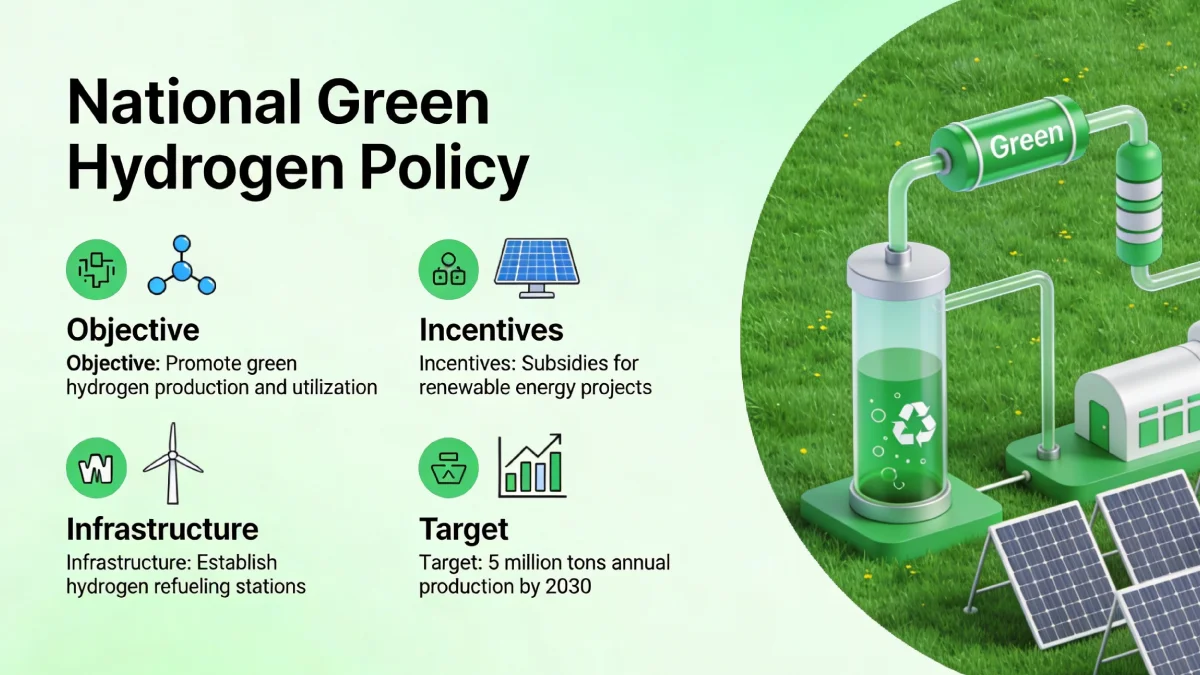
The funding is expected to be disbursed in phases through FY2026-27, FY2027-28, and FY2028-29, with performance-linked incentives (PLIs) for manufacturing partners. This aligns with India's target to produce 5 million metric tonnes of green hydrogen annually by 2030.
Important Dates & Milestones: Mark Your Calendar
| Event/Milestone | Expected Timeline | Status |
|---|---|---|
| Cabinet Approval (Phase-II Announcement) | May 2026 | ✓ Approved |
| RFP (Request for Proposal) Release | June-July 2026 | Upcoming |
| Expression of Interest (EOI) Deadline | August-September 2026 | Upcoming |
| Project Allocation Announcements | Q4 2026 | Expected |
| Production Pilot Launch | 2027-2028 | Target |
| 5 MMTPA Production Target | 2030 | Goal |
Who Is Eligible? Target Beneficiaries & Participation
Organizations That Can Apply
- Government PSUs: NTPC, GAIL, IOCL, SAIL, and other Central Undertakings
- Private Sector: Established industrial houses with proven track record in energy/manufacturing
- Renewable Energy Companies: Solar/wind firms expanding into hydrogen
- Startups: Innovative hydrogen tech companies (subject to DPIIT recognition)
- Joint Ventures: Consortium of Indian + foreign partners meeting FDI guidelines
Eligibility Criteria
While the full RFP guidelines are awaited (expected June 2026), typical eligibility includes: minimum 5-year operational history, INR 50+ crore net worth, technical expertise in electrochemistry or renewable energy, environmental clearance readiness, and land/infrastructure availability. Foreign collaboration is permitted but must comply with India's FDI policy.
Application Process: How to Apply (Step-by-Step)
While the official RFP hasn't been released yet (as of May 2026), the anticipated application process will follow this structure:
- Register on Official Portal: MNRE (Ministry of New and Renewable Energy) will announce the dedicated portal for submissions (likely by June 2026).
- Download RFP Documents: Access detailed Request for Proposal, including technical specifications, financial terms, and land requirements.
- Submit Expression of Interest (EOI): File EOI with company profile, proposed capacity, technology, and timeline (August-September 2026, estimated).
- Submit Complete Proposal: After EOI shortlisting, submit comprehensive bid with detailed project report, financial model, environmental impact assessment, and team credentials.
- Technical & Financial Evaluation: Government committees evaluate proposals on technical feasibility, cost efficiency, timeline, and job creation potential.
- Award Letter & Signing: Selected applicants receive project allocation letter and sign Concession Agreement with government ministry.
- Begin Construction & Operations: Implement project as per timeline with quarterly progress reviews and compliance checks.
Pro Tip for Exam Takers: The application architecture—EOI → Technical Bid → Financial Bid → Award—is a common government procurement model. Expect SSC/UPSC questions on similar schemes.
Selection Process & Evaluation Criteria
Two-Stage Selection
Stage 1 (Technical Qualification): Committees assess technology maturity, land availability, water access, renewable energy proximity, environmental feasibility, and implementation timeline credibility.
Stage 2 (Financial & Strategic Fit): Evaluation of cost per MT of hydrogen, employment creation, export potential, Make-in-India contribution, and alignment with state/regional development priorities.
Scoring Weightage (Indicative)
- Technical Feasibility: 40%
- Cost Efficiency & Financial Model: 30%
- Job Creation & Skill Development: 15%
- Export Potential & Strategic Value: 15%
Strategic Context: Why This Matters for Exams
UPSC IAS Relevance
This policy touches Environment (Climate Action), Economy (Industrial Growth, Foreign Investment), Technology (Green Energy Innovation), and Governance (PSU vs. Private Sector collaboration). Expect 2-3 questions in the Mains syllabus under GS-3 (Economy & Sustainability).
SSC General Awareness Connection
SSC CGL/CHSL exams frequently ask about: Government schemes, renewable energy targets, Cabinet decisions, and employment generation. The Green Hydrogen Mission Phase-II hits all these marks.
Key Concepts to Memorize
- Green Hydrogen: H₂ produced via electrolysis using renewable energy (solar/wind)
- Grey Hydrogen: H₂ from natural gas reforming (current method, carbon-intensive)
- Blue Hydrogen: H₂ from natural gas with carbon capture
- Mission Target: 5 MMTPA (million metric tonnes per annum) by 2030
- Lead Ministry: Ministry of New and Renewable Energy (MNRE)
- Global Context: Australia, Germany, UAE also investing heavily in green hydrogen
Preparation & Current Affairs Strategy: How to Study This
For UPSC Aspirants
Create a comprehensive case file on the Green Hydrogen Mission: Bookmark the official MNRE website, follow PIB press releases, read Indian Express/Hindu editorials on energy policy. Cross-link this with India's Climate Change commitments (Paris Agreement, NDCs), industrial policy (PLI Scheme), and global hydrogen economy trends. Practice answer-writing: "What are the key objectives of India's National Green Hydrogen Mission, and how will Phase-II accelerate their achievement?"
For SSC Candidates
Focus on factual retention: Mission launch date (2021), Phase-II approval date (May 2026), target capacity by 2030, lead ministry, expected investment, and job creation numbers. Create flashcards for quick revision. Practice 1-2 word MCQs ("The lead ministry for Green Hydrogen Mission is: (a) MoEP (b) MNRE (c) NITI Aayog (d) DSIR").
For Banking/Insurance Exams
Link this news to India's economic growth story, infrastructure investment, and sectoral opportunities. Understand how green hydrogen fits into India's 2030 renewable energy target (500 GW) and 2070 net-zero goal. This strengthens your General Awareness for IBPS/SBI exams.
Real-World Impact: Career & Industry Opportunities
Job Creation Potential
Phase-II is expected to generate 50,000+ direct jobs (manufacturing, R&D, operations) and 2-3x indirect employment (supply chain, logistics, services). Key sectors hiring: Electrolyzer companies, renewable energy integration firms, hydrogen storage startups, and government regulatory bodies.
Industries Set to Transform
- Steel & Cement: Using hydrogen instead of coal in blast furnaces and kilns
- Heavy Transport: Hydrogen-powered trucks and trains replacing diesel
- Fertilizer Production: Green ammonia synthesis for agriculture sector
- Refining: Oil refineries adopting hydrogen for hydro-processing
- Chemicals & Petrochemicals: Hydrogen feedstock for methanol, synthetic fuels
Key Takeaways for Exam Success
- Event: Cabinet approves National Green Hydrogen Mission Phase-II (May 2026) with major funding
- Target: 5 million metric tonnes per annum green hydrogen production by 2030
- Lead Agency: Ministry of New and Renewable Energy (MNRE)
- Expected Corpus: ₹5,000+ crore across FY2026-27, FY2027-28, FY2028-29
- RFP Timeline: June-July 2026 (Expression of Interest), September 2026 (Final bids)
- Eligibility: Government PSUs, private sector firms, renewable companies, startups (with conditions)
- Exam Relevance: UPSC GS-3, SSC General Awareness, Banking Sector Knowledge
Frequently Asked Questions
What exactly is green hydrogen, and how is it different from regular hydrogen?
Green hydrogen is produced by splitting water (H₂O) using electricity from renewable sources like solar or wind. Regular (grey) hydrogen comes from natural gas reforming, which releases CO₂ emissions. Green hydrogen is 100% emission-free. The National Green Hydrogen Mission Phase-II focuses entirely on scaling this clean production method across India's industrial base.
When will the application portal for Phase-II projects open?
As per latest reports, the official RFP (Request for Proposal) is expected to be released in June-July 2026 on the MNRE website. The Expression of Interest (EOI) deadline is anticipated in August-September 2026. Organizations should register on the dedicated portal (to be announced by MNRE) to receive notifications. Check pib.gov.in regularly for exact dates.
Who is eligible to apply for Phase-II green hydrogen projects?
Eligible applicants include: Government PSUs (NTPC, GAIL, IOCL, SAIL), established private companies with 5+ years operational history and ₹50+ crore net worth, renewable energy firms, DPIIT-recognized startups, and joint ventures with foreign partners. Foreign participation is allowed subject to India's FDI policy guidelines. Full eligibility criteria will be in the RFP document.
What is the expected investment size for Phase-II, and who funds it?
The Cabinet has approved a substantial budgetary allocation (expected ₹5,000+ crore) disbursed across three fiscal years (FY2026-27 to FY2028-29). Funding comes from government budgets, PLI (Performance-Linked Incentive) schemes, and beneficiary organizations' own capital. Project developers must co-invest; government provides grants and incentives. Exact cost-sharing details will be in the RFP.
What is the timeline from application to actual production startup?
Typically: RFP release (June 2026) → EOI submission (August-September 2026) → Proposal evaluation (October-December 2026) → Award letter (Q4 2026) → Land acquisition & construction (2027) → Pilot production (2027-2028) → Commercial operation (2028-2029). Full-scale production ramp-up is targeted by 2030 to meet the 5 MMTPA national goal.
Why is green hydrogen critical for India's economy and exam syllabus?
Green hydrogen is pivotal for India's net-zero 2070 commitment, industrial decarbonization, energy independence, and job creation. It enables clean production in steel, cement, fertilizer, and fuel sectors. For competitive exams, it represents the intersection of climate policy, industrial growth, and technology innovation—core UPSC/SSC Current Affairs topics. Expect 2-3 questions in upcoming exams on this mission.
Which states will benefit most from Phase-II projects?
While project locations haven't been announced, states with strong renewable energy capacity (Rajasthan, Gujarat, Tamil Nadu, Karnataka), existing industrial clusters (Gujarat, Maharashtra, Odisha), or proximity to ports (for export) are likely hubs. States with committed renewable capacity + adequate water supply (critical for electrolysis) will attract projects first. Final allocation depends on RFP responses.
📌 Source: Information based on latest reports and official notifications as of 11 May 2026. For the most accurate and updated details, candidates are advised to visit the Press Information Bureau (PIB). iGET is a learning resource portal — we do not represent any official authority. Verify all dates, eligibility, and procedures from official sources before applying.
A Delhi-based developer building an honest, no-chaos study platform for Indian competitive exams. I personally review every post on iGET to ensure accuracy. Spot an error? Email me directly.